Key takeaways
- Pecorino Romano PDO may only be made in Sardinia, Lazio and the province of Grosseto in Tuscany, from whole sheep’s milk from flocks in that area, under the control of its protection consortium.
- Table grade is aged from five months and suits retail and deli. Grating grade is aged from eight months and suits foodservice and industrial use.
- Buying the wrong grade for the channel is the most common first-order mistake.
- A genuine wheel carries the fire-branded mark with the consortium’s stylised sheep’s head and the PDO wording. A hard sheep’s cheese made elsewhere, or from cow’s milk or a blend, cannot carry it.
- Being certified is not the same as being eligible to export to your country, and that is where many programmes fail after the price is agreed.
- Our minimum is one pallet, mixed across products and producers, so Pecorino Romano can ship alongside other lines at entry volume.
Pecorino Romano is one of the oldest cheeses still in commercial production and one of Italy’s largest cheese exports. It is also one of the most misunderstood at the buying desk, because the name is used loosely. Plenty of what sells abroad as “pecorino romano” is a hard sheep’s milk cheese made somewhere else entirely, and it is legal to sell as long as it does not carry the PDO mark. If you are listing this cheese in a retail or foodservice programme, the difference decides what you can put on the label and what you can charge.
This guide covers what the PDO actually restricts, how the aging grades map to channels, the formats that ship, and the documents you need in order to import it.
Summarize this article with AI
What does the Pecorino Romano PDO actually protect?
The protected designation of origin restricts three things at once: where the milk comes from, where the cheese is made, and how it is made.
Production is limited to the island of Sardinia, the region of Lazio, and the province of Grosseto in Tuscany. The milk must be whole sheep’s milk from flocks in that area. The cheese is salted, pressed, and aged for a defined minimum period. Wheels that pass inspection carry a fire branded mark showing the consortium’s stylised sheep’s head and the PDO wording.
Anything made outside those regions, or from cow’s milk, or from a blend, is not Pecorino Romano PDO. It may still be a perfectly good hard sheep’s cheese. It cannot carry the mark, and a category manager who lists it as PDO is exposed if a buyer or an inspector checks.
How to Check That a Wheel Is Genuine Pecorino Romano PDO
Plenty of hard sheep’s milk cheese sells abroad under a loose “pecorino romano” description, legally, as long as it does not carry the PDO mark. Before a listing goes live, check three things. The wheel carries the fire-branded mark with the consortium’s stylised sheep’s head and the PDO wording. The dairy is registered with the protection consortium, which we confirm before we quote. And if you buy cut product rather than whole wheels, the invoice and packing list carry the PDO description and the lot data that tie the cut back to a marked wheel.
A category manager who lists a non-PDO sheep’s cheese as PDO is exposed the first time a buyer or an inspector checks, so this is worth settling before the label is printed.
Which aging grade should you buy?
The regulation sets two minimums, and they map cleanly onto two different jobs.
Table grade is aged from five months. It is firmer than a young pecorino but still sliceable, and it goes into deli counters, cheese boards and retail wedges. This is the grade to buy if the cheese is being sold to be eaten as cheese.
Grating grade is aged from eight months. It is drier, harder and considerably saltier, and it is the grade that goes into foodservice kitchens, pasta programmes and industrial use. This is what a pizzeria or a carbonara operator wants.
Buying the wrong grade is the most common mistake we see on a first order. A retail programme loaded with eight month grating stock reads as harsh and over salted to a consumer. A foodservice account given five month table stock complains that it does not grate cleanly and disappears in the dish.
| Grade | Minimum aging | Texture | Where it sells | If you buy it for the wrong channel |
|---|---|---|---|---|
| Table grade | 5 months | Firmer than a young pecorino, still sliceable | Deli counters, cheese boards, retail wedges | A foodservice account finds it does not grate cleanly and disappears in the dish |
| Grating grade | 8 months | Drier, harder, considerably saltier | Foodservice kitchens, pasta programmes, industrial use | A retail shopper finds it harsh and over salted |
What formats does it ship in?
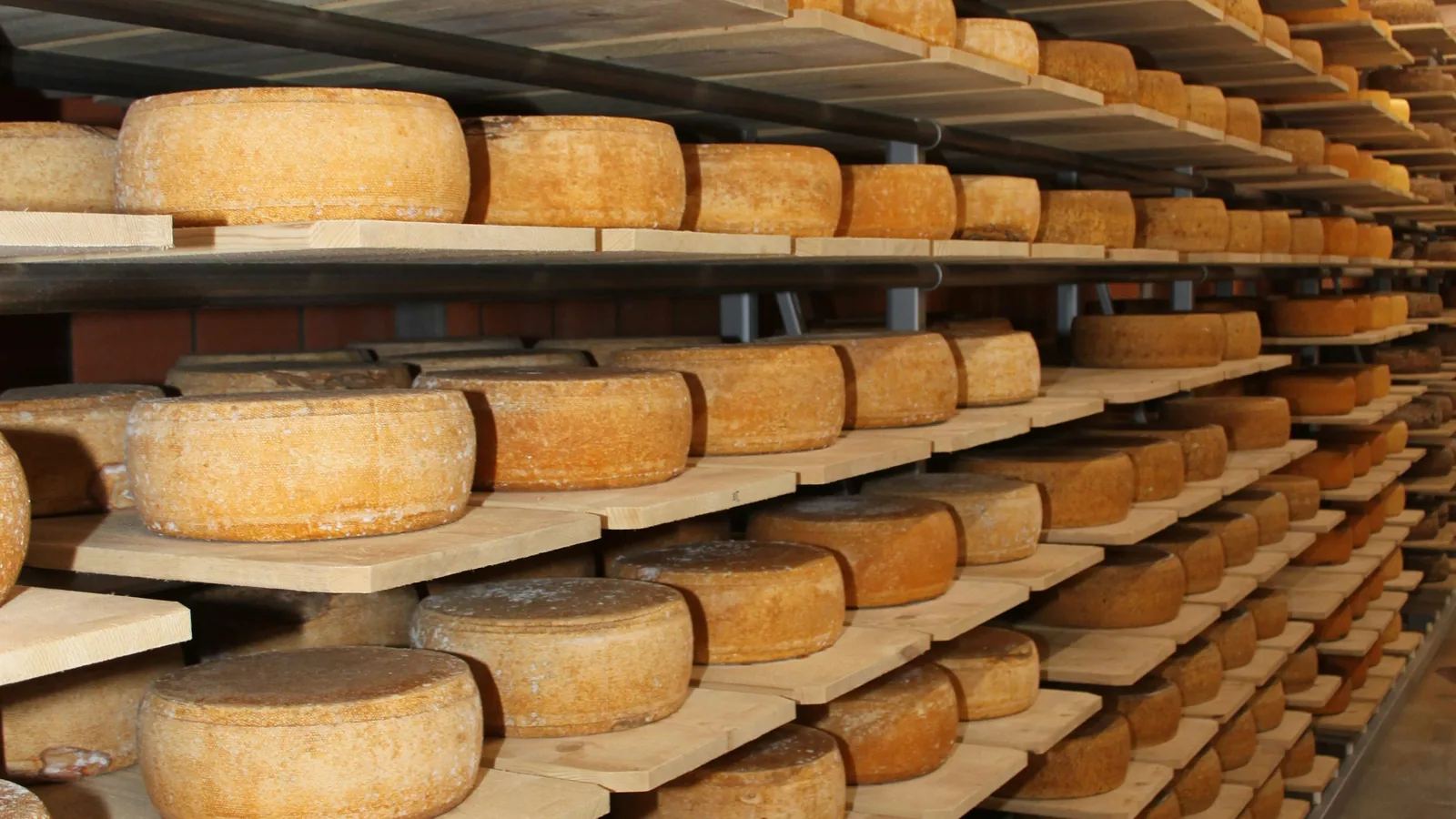
Pecorino Romano is made as a large cylindrical wheel. Depending on the dairy, a full wheel typically runs between roughly twenty and thirty five kilograms.
For distribution the wheel is usually broken down before it ships. The common export formats are the whole wheel for cutting at destination, halves and quarters for deli counters that cut to order, vacuum packed wedges in retail weights, and grated or shredded packs for foodservice.
Format choice is not cosmetic. A whole wheel gives your customer the best yield and the strongest counter theatre, but it requires someone at destination who can cut and wrap it. Vacuum wedges cost more per kilo and give up the theatre, but they list straight onto a shelf. Grated packs carry the shortest shelf life of the three. Decide which one your channel can actually handle before you price the programme.
| Format | Best for | Trade-off |
|---|---|---|
| Whole wheel, roughly 20 to 35 kg | Counters with someone who can cut and wrap | Best yield and counter theatre, but needs skill at destination |
| Halves and quarters | Deli counters that cut to order | Less handling than a wheel, still needs cutting |
| Vacuum packed wedges | Retail shelves | Higher cost per kilo, lists straight onto a shelf |
| Grated or shredded packs | Foodservice | Shortest shelf life of the formats |
Who we buy from
ALL-FOOD is a sourcing and export office in Tuscany, not a dairy. For Pecorino Romano we work with consortium-registered producers and we confirm registration before we quote, because the PDO mark is the whole basis of the product.
What we check on your behalf, on every dairy, before a quotation goes out: that the dairy is registered with the protection consortium and the wheels carry the fire branded mark; that the plant holds the food safety certification your market or your customer requires, which in practice means ISO 22000, BRC or IFS; and that the plant is eligible to export to your specific destination, which is a separate question from being certified and is where a surprising number of programmes fail after the buyer has already agreed the price.
What documents does an importer need?
The paperwork depends on the destination, but the shape is consistent for a cheese of animal origin.
You will need a health certificate issued for the consignment, an establishment level approval or listing for the producing dairy in the destination market, a commercial invoice and packing list showing the PDO description, and labelling that complies with the destination’s rules on language, allergens and nutrition declaration. Some markets add a quota or tariff question on top of that, and for dairy that question is often the one that decides whether the arithmetic works at all.
We assemble that file as part of the shipment rather than leaving the importer to chase it.
Ordering at a realistic volume
Our minimum order is one pallet, mixed across products and producers. Most Italian factories require one to two pallets per single SKU, which is why a first Pecorino programme so often stalls before it starts. We consolidate several producers onto one pallet, so you can take Pecorino Romano alongside Parmigiano Reggiano, olive oil or pastry at entry volume, and find out what sells before you commit to a full SKU run.
A checklist before you place a first order
- Confirm the dairy is registered with the protection consortium and the wheels carry the fire branded PDO mark.
- Decide the grade by channel: table grade from five months for retail and deli, grating grade from eight months for foodservice.
- Match the format to the customer’s capability: whole wheel, halves and quarters, vacuum wedges or grated.
- Check the dairy is approved to export to your specific destination, not merely certified.
- Confirm the labelling language and nutrition format your market requires before artwork is printed.
- Check the tariff and quota position for cheese in your market before you price the programme.
- Take a mixed first pallet rather than a single SKU run, and let sell through decide the second order.
If you are building a Pecorino Romano listing, tell us the channel, the destination and the format you can handle, and we will come back with matching consortium-registered producers, full specifications and a quotation. Samples can be arranged before you commit.
Frequently asked questions
Where can Pecorino Romano PDO be produced?
Production is limited to the island of Sardinia, the region of Lazio, and the province of Grosseto in Tuscany. The milk must be whole sheep’s milk from flocks in that area, and the cheese is salted, pressed and aged under the control of the protection consortium.
What is the difference between table grade and grating grade Pecorino Romano?
Table grade is aged from five months. It is firmer than a young pecorino but still sliceable, and it goes into deli counters, cheese boards and retail wedges. Grating grade is aged from eight months. It is drier, harder and considerably saltier, and it goes into foodservice kitchens, pasta programmes and industrial use.
What formats does Pecorino Romano ship in for export?
The common export formats are the whole wheel for cutting at destination, halves and quarters for deli counters that cut to order, vacuum packed wedges in retail weights, and grated or shredded packs for foodservice.
What is your minimum order for Pecorino Romano?
Our minimum order is one pallet, mixed across products and producers. We consolidate several producers onto one pallet, so you can take Pecorino Romano alongside Parmigiano Reggiano, olive oil or pastry at entry volume, and find out what sells before you commit to a full SKU run.
How can I tell genuine Pecorino Romano PDO from a generic sheep’s milk cheese?
A genuine wheel carries the fire-branded mark with the consortium’s stylised sheep’s head and the PDO wording, and comes from a dairy registered with the protection consortium. A hard sheep’s cheese made outside Sardinia, Lazio and the province of Grosseto, or from cow’s milk or a blend, cannot carry the mark.
What documents does an importer need for Pecorino Romano?
A health certificate for the consignment, an establishment level approval or listing for the dairy in the destination market, a commercial invoice and packing list showing the PDO description, and labelling that meets the destination’s rules on language, allergens and nutrition declaration.

About the author
Giorgio Morocica
Export Manager at ALL-FOOD
Giorgio leads export operations at ALL-FOOD, sourcing and shipping authentic Italian food for importers, distributors and retail chains across the USA, Canada, Australia, the Middle East and South America. He writes about the sourcing, compliance and logistics questions buyers actually run into.
Connect on LinkedIn