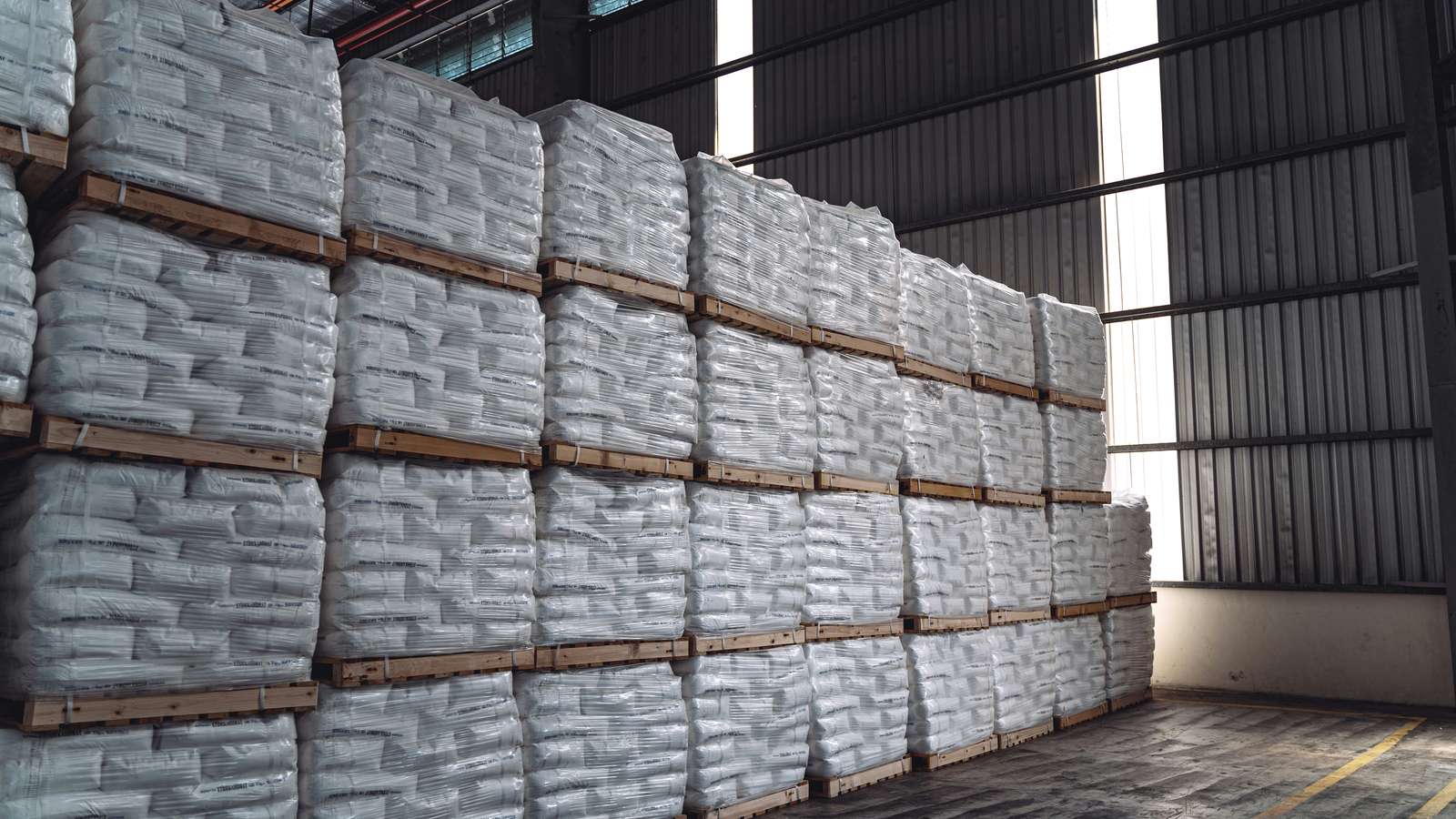
If you are importing Italian food for the first time, the number that decides whether it works is not the price per case. It is how much value you managed to get onto the pallet. A pallet loaded only with cheap, heavy goods can end up carrying logistics costs of around 24% of the goods value. Build that same pallet to 2,000 to 3,000 euros by mixing in higher-value lines and freight incidence typically falls to somewhere between 6 and 10%.
That gap is not a discount anyone gave you. It is arithmetic. And it is the single thing that decides whether a first Italian order lands at a price you can actually sell at.
Summarize this article with AI
The freight cost does not care what is on the pallet
Here is the part that catches people out. When a forwarder quotes you a road groupage shipment out of Italy, the number is driven by space and weight, not by what the space contains. A pallet is a pallet. The truck charges you for the slot.
So the cost per pallet is close to fixed, and the only variable you control is how much value you put inside that fixed cost.
Load it with goods that have a low value per kilo, flour, dry pasta, canned tomatoes, bottled water, and you have bought a very expensive slot for not much merchandise. The freight, the customs formalities, the documentation, the handling at both ends: all of it lands on a small pile of goods. Divide the total logistics cost by the goods value and you get a number in the region of 24%. On a product with a normal food-trade margin, 24% incidence is not a squeeze. It is the whole margin.
Now take the same pallet slot and fill it with a spread of products that adds up to 2,000 to 3,000 euros of goods value. The freight barely moves. The customs declaration is one declaration whether the pallet holds one item or twenty. The incidence collapses to 6 to 10%.
Same truck. Same paperwork. Same lead time. Radically different landed cost.
The mistake first-time importers make
The instinct is completely rational, and it still produces the wrong pallet.
We had a conversation recently with an independent pizzeria owner in Eastern Europe who was working it through carefully. He wanted flour, peeled tomatoes and dry goods generally. Long shelf life, every item.
His reasoning was good. He was buying for two purposes at once: products he would use in his own kitchen, and products he wanted to test on other pizzerias in his area. Long shelf life covered the downside. If the resale side did not take off, nothing spoils and nothing gets written off, because he simply works through the stock himself. That is real risk management, and most first-time importers do not think it through that clearly.
The problem was not the logic. The problem was the pallet it produced.
Flour, tinned tomatoes and ambient dry goods are all heavy and all inexpensive. Load a pallet with nothing but that group and it fills the slot and the weight allowance long before it fills the invoice. Run the numbers and the logistics incidence sits around 24%. At that level the goods arrive costing more than what he could buy locally, and the whole exercise stops making sense before it starts.
This is the part worth sitting with, because it is where the usual advice is too crude. Mixing products is not automatically the fix. A pallet carrying eight different cheap, heavy, long-life items has exactly the same problem as a pallet carrying one. What changes the arithmetic is not variety. It is value density.
So the answer was not to talk him out of the flour or the tomatoes. Those stay, and the shelf-life logic behind them stays too. The answer was to put them on a pallet that also carries a cheese line, some cured meats and an olive oil, so the heavy cheap goods stop paying for the entire truck on their own. He still gets his safety net. It just rides along with enough value to make the freight defensible.
What “mixed pallet” actually means in practice
A mixed pallet is one shipment containing products from several different Italian producers, consolidated into a single unit before it leaves Italy.
That consolidation is the part that is hard to do yourself. If you buy from eight producers directly you have eight suppliers, eight order confirmations, eight sets of shipping documents, eight producers who each want you to hit their own minimum, and eight small collections that a forwarder will happily charge you for individually. The freight saving you were chasing disappears into coordination costs and pickup fees.
Consolidated properly, it looks different. One order. One contact. One collection point in Italy. One set of export documents. One arrival at your warehouse. The producers still get their minimums met, because those minimums are met at the case or the box level against a combined order, not against your single-buyer volume.
This is the mechanical reason an export office exists. Not to be a layer between you and the producer, but to make a pallet that no individual producer could have built.
How to build a first pallet that pays for itself
Three questions decide whether the first shipment works.
What is your value per kilo? Look at the products you want and sort them by how much euro of goods you get per kilo of weight. Flour, water-packed products, canned goods and bulk items are heavy and cheap. Cheese, cured meats, speciality oils, truffle products, confectionery and speciality preserves carry far more value in the same weight. A pallet built only from the first group will always have bad incidence. A pallet that mixes the two groups balances out.
What do you actually turn? There is no point improving the freight ratio by loading the pallet with things that sit in your storeroom for a year. The mix has to be products you will sell, just spread across more lines and shallower on each. Ten cases each of eight products usually beats eighty cases of one.
What is the target value? Aim for 2,000 to 3,000 euros of goods on the pallet. That is the range where the incidence lands in single digits or low double digits and the shipment stops fighting you. Below it, the fixed costs dominate. That target is the thing to build your product list around, rather than building the list first and discovering the freight afterwards.
Why this matters more than the price per case
Buyers negotiate hard on unit price and then lose more than they won on logistics.
A 5% improvement on the ex-works price of a product feels like a victory. It is a real victory. But moving logistics incidence from 24% to 8% is a sixteen-point swing on the same goods, and it requires no negotiation at all. It requires a different shopping list.
This is why our first conversation with a new buyer is almost never about the catalogue. It is about channel, volume, storage, how fast you turn stock, and what the realistic first-order value looks like. Once we know that, the product selection is a solvable problem. Start from the catalogue instead and you end up with a beautiful range and a landed cost that does not work.
If you want the related question of how deep you have to go on any single line, we covered supplier minimums separately in our piece on minimum order quantities for Italian food.
Where the ratios come from and where they end
Two honest caveats.
The 24% and the 6 to 10% are ratios from real shipment planning, not universal constants. Your actual numbers move with distance, destination country, fuel, whether the goods are ambient or temperature-controlled, and how efficiently the pallet is built. A chilled shipment to a distant market behaves differently from an ambient pallet to a neighbouring one.
The direction, though, is not in doubt. Consolidating value onto a fixed-cost slot always improves incidence. The only question is by how much in your specific case, and that is a question a forwarder quote answers in a day once the pallet composition is defined.
Frequently asked questions
What is logistics incidence?
It is the total logistics cost of a shipment expressed as a percentage of the value of the goods on it. A pallet loaded only with cheap, heavy goods can run at around 24%. A pallet built to 2,000 to 3,000 euros of goods typically runs at 6 to 10%.
Why is a pallet of cheap, heavy goods more expensive to ship?
Because the cost of a pallet slot is close to fixed. It is driven by space and weight, not by what is inside. Heavy, inexpensive products fill the slot and the weight allowance without filling the invoice, so the same fixed cost is spread over far less goods value.
Does simply mixing several products solve it?
No. A pallet carrying eight different cheap, heavy, long-life items has the same problem as a pallet carrying one. What changes the arithmetic is value density, not variety.
What value should I aim for on a first pallet?
Aim for 2,000 to 3,000 euros of goods value. That is the range where logistics incidence falls into single digits or low double digits.
Can I still order the cheap staples I actually need?
Yes. The point is not to replace them. Flour, tinned tomatoes and ambient dry goods stay on the pallet. The point is to stop them carrying the freight cost of an entire pallet on their own, by shipping them alongside higher-value lines.
Why not buy from each Italian producer directly?
Because eight producers means eight orders, eight sets of shipping documents, eight minimums to meet and eight separate collections in Italy. The coordination costs and pickup charges absorb the freight saving you were trying to capture.
Are these percentages the same for every shipment?
No. They move with distance, destination country, fuel, whether the goods are ambient or temperature-controlled, and how well the pallet is built. The direction is consistent, but the exact figures need a forwarder quote against a defined pallet composition.

About the author
Giorgio Morocica
Export Manager at ALL-FOOD
Giorgio leads export operations at ALL-FOOD, sourcing and shipping authentic Italian food for importers, distributors and retail chains across the USA, Canada, Australia, the Middle East and South America. He writes about the sourcing, compliance and logistics questions buyers actually run into.
Connect on LinkedInWorking with ALL-FOOD
ALL-FOOD is an Italian export office in Tuscany. We source from Italian producers, consolidate across them, and ship a single mixed pallet so a buyer deals with one partner in Italy instead of eight. For buyers building an own-brand range, our private label programme runs across cured meats, bakery, cheese and oil.
Tell us the products you are planning, your channel and the volume you realistically turn, and we will come back with a pallet composition and the logistics incidence that goes with it.